Techniques
-
Ritual Technologies: Light and Beauty
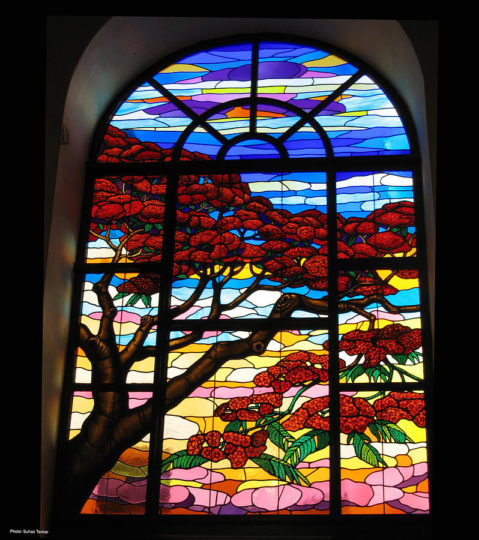
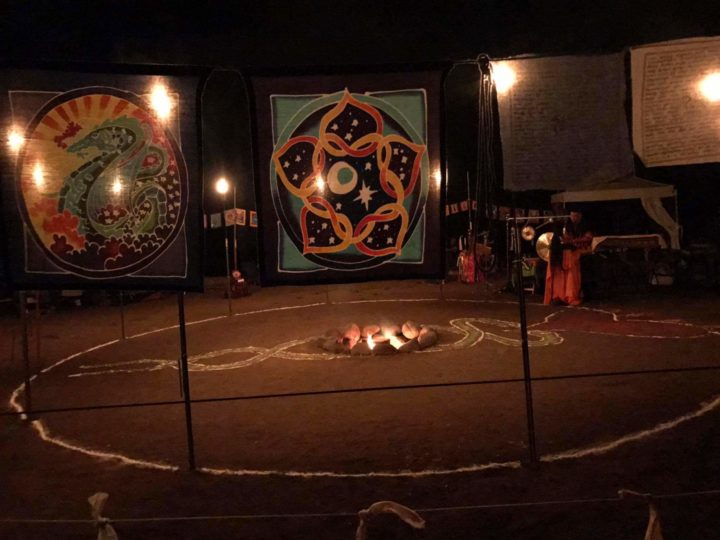
Imagine being in a cathedral. The hush, the dim light from stained glass windows and flickering candles, the faint scent of incense. The faint sound, perhaps, of sacred music through the profound silence. The architecture that sends the eye reaching up, up, to barely discernible vaults. Massive columns, larger-than-life statues of saints. Which, in turns, make the viewer feel small, insignificant by comparison to the soaring magnificence surrounding her. That’s sacred space. The mind cannot help but to downshift into Present, liminal consciousness. Into the Ritual State, which is also known as “trance”. These factors are not accidental. They were learned, over countless years, by those who meant for those who entered…
-
Ritual Technologies: Sing!
If there is one human sense more than any other that really drills down beneath the thinking mind and evokes feelings, memories, longings, it would be the sense of smell. Olfactory cues go to the most primitive parts of our brains, and are remarkably powerful in snapping us back to powerful feelings and moments long past. Unfortunately, the experience of scent is passive, rather than expressive. While we have receptors for tremendously subtle combinations of chemical cues, we are not able to express ourselves in kind. The second-most powerful sense in terms of emotional impact, however, is sound—particularly, music. Music has the capacity to transport us, to evoke a wide range of…
-
Music for Atheopagan Ritual Use
The music below was recommended by members of the Atheopagan Facebook group for use in Atheopagan rituals. Particularly in solitary rituals (when, obviously, having live accompaniment isn’t possible), the addition of a musical “soundtrack” can be tremendously powerful. Also listed are some sources for chants which can be used in group rituals—singing is one of the most powerful ways to bring people together and build the sense of energy in a ritual! This list will grow as new music is suggested. Adiemus (Karl Jenkins): The Journey Anonymous4: Many disks of this a cappella women’s medieval music ensemble could work well for ritual; I prefer 11,000 Virgins: Chants for the Feast of St. Ursula by…
-
Atheopagan Ritual: Gratitude and Benediction
This is one of a series of articles about creating Atheopagan rituals. They expand on the Atheopagan Ritual Primer, to which they will be added after the whole series has been published online. The previous articles in the series are Arrival, Qualities and Intentions, and Deep Play. There are also some notes on proper settings for rituals (and why we do them) here. Gratitude When the Deep Play is done, it is time to express Gratitude. Gratitude is such a key element of a happy life that even when our rituals are to assuage fear or sorrow, we must always remember the many gifts with which we are showered by the Cosmos…
-
Atheopagan Ritual: Working or “Deep Play”
This is the third in a series of articles about creating Atheopagan rituals. They expand on the Atheopagan Ritual Primer, to which they will be added after the whole series has been published online. The ritual structure outlined in the Primer is: Arrival, Qualities, (Intention), Working or “Deep Play”, Gratitude and Benediction. This article focuses on the third phase: Working or Deep Play. The Working is the “meat” of the ritual–it can be the hardest phase to write about, because it can be nearly anything. It can be free-form dancing with spontaneously offered chant, song, spoken word, and music, or line or spiral dancing; it can be laying of hands on an ailing celebrant; it can…
-
Atheopagan Ritual: Invoking Qualities and Intentions
This is one of a series of articles about creating Atheopagan rituals. They expand on the Atheopagan Ritual Primer, to which they will be added after the whole series has been published online. The ritual structure outlined in the Primer is: Arrival, Qualities, (Intention), Deep Play, Gratitude, and Benediction. This article focuses on the second and optional third phases: Invocation of Qualities and Declaration(s) of Intentions. 1) QUALITIES “Calling the Qualities” is often just that: A designated celebrant encourages the circle to call out the Qualities they would like to be a part of the circle, and celebrants call them out (examples: the Ancestors; Compassion; Grief; Courage; Adventure, Strength, Health, Wisdom). It is more effective if,…
-
Atheopagan Ritual: Denatured? Some Notes.
I’ve been thinking and writing about rituals recently, as I roll out a series of pieces detailing each phase of the Atheopagan ritual structure described in the Atheopagan Ritual Primer. Some naturalist Pagans express concern about the ability of humanistic/naturalistic/Atheopagan rituals to create truly transcendent experiences. Faith, it is suggested, sets the table for a far deeper experience; as atheists, we will inevitably have our rituals denatured by our lack of belief. It is fair to acknowledge that Atheopagans could potentially experience this problem. But I don’t think the characterization has to be true. I think we just have to work a little harder. Yes, we must create ritual space which enables us to background the…
-
Atheopagan Ritual: Arrival
This is one of a series of articles about creating Atheopagan rituals. They expand on the Atheopagan Ritual Primer, to which they will be added after the whole series has been published online. It should be pointed out that the Atheopagan ritual structure described in the Primer and in my essay “How I Became an Atheopagan” is only one of many possible ways to structure effective ritual. The structure is a reliable way to induce the Ritual State, to do the transformational or celebratory work, and to resolve into a state of gratitude, empowerment, peace and/or energy. This, in a nutshell, is what ritual is and does. So while experimentation with structure can be fruitful,…
-
The Focus
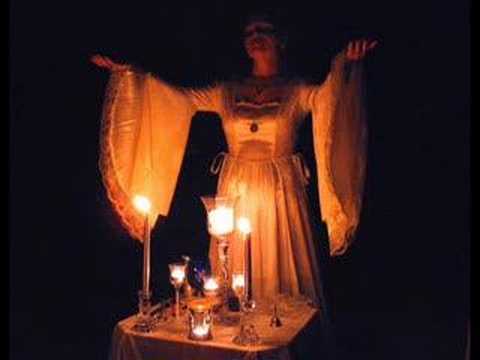
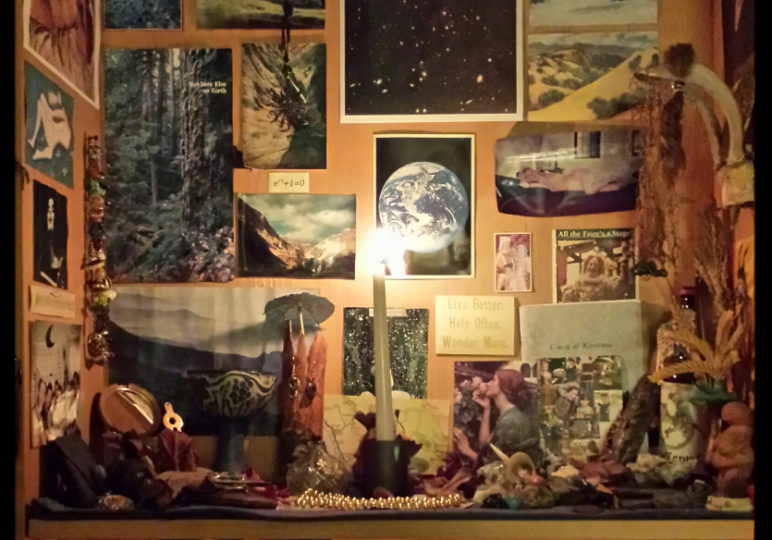
This piece is excerpted from the Atheopagan Ritual Primer. A Focus is what Atheopagans call an altar. We choose a different word because “altar” implies worship—or even sacrifice—and we want to be clear that that isn’t what we are doing. The Focus is a work of art: a still life assemblage of symbols and meaningful objects. It can be central to the enactment of a ritual, or it may be off to one side. Multiple Foci may be used if desired, designed around different themes. Building a Focus is a fun and creative activity and can itself be done as a ritual, in an intentional, Present and “focused” manner. Typically, a…
-
The God Mask – A Ritual Technique
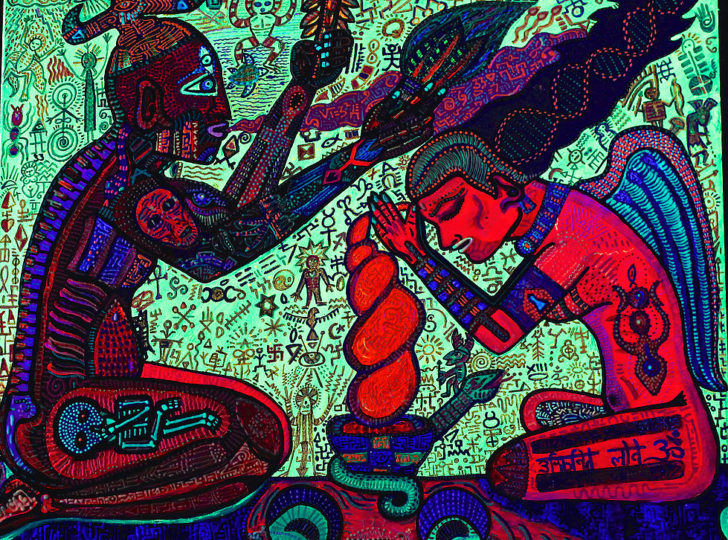
We had a great conversation at our online video chat in the Facebook Atheopagan group today. Topics ranged, but one that stuck out for me was Glen Gordon’s discussion of his work to create a new lexicon for Pagan and ritual phenomena he feels aren’t well defined by existing words in English. As I’ve said elsewhere, although an atheist I spent many years circling in ritual with various elements of the Pagan community here in Northern California, viewing the invocation of gods and the conducting of “magic” as metaphorical, psychological processes to influence the minds of participants rather than as literal communications and physically effective influencers of events. Having now…