-
The Deep Secret of Emergent Complexity
WARNING: This is somewhat heavy lifting, but when you get it, it will blow your mind. In a really good way. If you want to immerse yourself in a miraculous and fundamental characteristic of our Universe, read Complexity by M. Mitchell Waldrop and Chaos by James Gleick. Or, if you’re in a hurry, watch these two Stanford lectures by the celebrated neurobiologist Robert Sapolsky, but be warned: in spite of Sapolsky’s sense of humor, it is dense–although fascinating–going. These works answer a profoundly basic question about our Universe: why are things as they are? Why do simple things combine to make completely different things? Our Universe is not decreed top-down…
-
Why the Doomsters are Completely Wrong
My friend John Halstead has published Die Early and Often: Being Attis in the Anthropocene, recently reprinted in Medium. In it, he argues that the job of humanity now is to die gracefully: to accept that extinction is coming and work to leave a legacy that supports the Earth’s further evolution and biodiversity, and the memory of a remarkable and admirable species. He spices this up with much Neopagan mythological stuff, such as the myth of the Dying God. But that’s in essence what he says. It’s a thoughtful, well-documented piece, and it’s completely wrong. It’s wrong for essentially four reasons: 1) It mistakes the very nature of the human…
-
Love in the Time of the Coronavirus
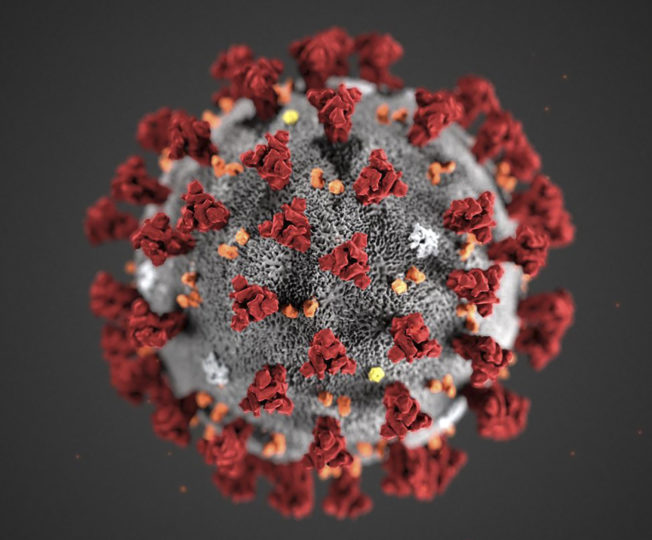
Hello, Atheopagans. By now, everyone knows about the novel coronavirus, COVID-19. It’s spreading rapidly and it has killed more than 3,800 people worldwide as of this writing. It appears to have a mortality rate in excess of 2%. To put that in context, the 1918 “Spanish” (it wasn’t) flu pandemic had a mortality rate of 2%, and it killed 20 million people worldwide. That’s more than died in World War I. This is a serious thing, and we need to treat it seriously. You can follow the progress of the virus at the Johns Hopkins University dashboard here. So please: do as public health officials ask that you will do. If…
-
The Point of Friction
Once upon a time in the mid-80s, few of the Pagans I knew ever even talked about what they believed. We just did rituals together and enjoyed one another’s company. Sure, there were shout-outs to various gods and goddesses in most of the rituals, but those were easily understood as metaphorical (as I did). When the subject of beliefs did come up, they were all over the map: there were those who believed in everything, from gods and magic and fairies to alien abductions and Atlantis…and then there were those like me who saw our rituals as meaningful but ultimately symbolic and metaphorical practices. And no one cared. We were…
-
Talking to Kids about the Cycle of Seasons
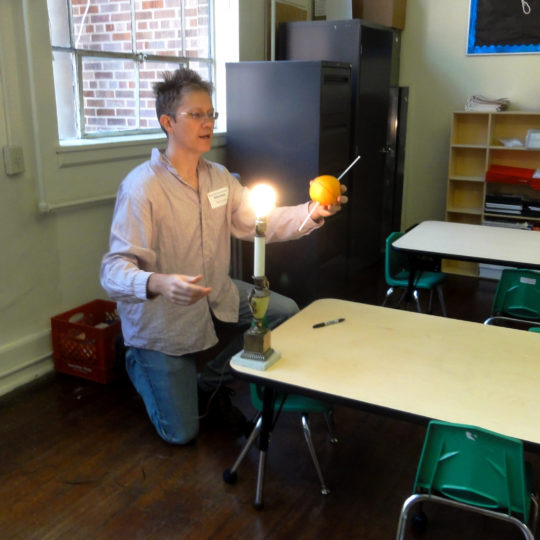
A guest post by Editor B. This past equinox marks the seventh year running that I’ve come in to my daughter’s school to talk to her class about the cycle of seasons. I started in 2012, when my daughter was in Pre-K. She and most of her classmates were four years old then. I’ve come in for every equinox and solstice since. Now my daughter is ten years old and in fifth grade. I’ve given some version of this presentation 25 times now, and these kids have grown up before my eyes. There have been some changes over the years, and also some persistent themes. I started off by reading…
-
What If We Are Screwed?
John Halstead very eloquently and thoroughly puts the question to us in his post “’Everything is Going According to Plan’”: Being an Activist in the Anthropocene”. Take time to read the whole thing. It’s well worth it. So really: what if it’s simply too late for any kind of peaceful transition to a sustainable post-disastrous civilization, and a messy and bloody collapse of industrial capitalism and Earth biodiversity in the context of skyrocketing global warming is now firmly set on course? It could be true. It may very well be true. What does this mean to us as Atheopagans, when we state explicitly that it is a part of our ethos to…
-
Mysterious Impulses
It’s a big subject, what it means to be human. We ask it in science, and in art, in literature. We get some answers. Neuroscience and anthropology have identified many facts about our species. But I’ve been thinking a lot about the mysteries of human nature lately. Like: what’s up with music? Why do we make it? Why is music a thing that is so important to us? And dancing? A completely unproductive expenditure of energy. Yet we love it. It’s ubiquitous. Perhaps just as mysteriously, why do we gravitate to bodies of water? Particularly to moving water, like waterfalls, the ocean, large lakes with tidal effects? Yes, we must…
-
Does Truth Matter?
Eppur si muove. —Galileo Galilei Recently. a friend posted to the Atheopaganism Facebook group, describing a conversation she was having elsewhere in which accusations of “classism” and “colonialism” were being leveled at those who express what is almost certainly the truth: that gods and magic do not exist, except as ideas. And you know? That accusation may have a point…if that message is directed at indigenous practitioners of native spiritualities. For those people, cultural preservation is important—and threatened—no matter how out of step with objective reality their beliefs might be. They have reasons to steward and preserve their cultures which have nothing to do with how factually accurate their…
-
The Miracle of Dirt
Of all the many factors on planet Earth that enable us to live and thrive, there are two which border, in my opinion, on the miraculous*: the conversion of sunlight into sugar through photosynthesis, and the mysterious alchemy of microbes and nutrients and water that makes dirt into the life-giver to us all. Yet we take dirt for granted—even denigrate it. It’s “dirty”, after all. We walk on dirt; we scrape it off our shoes and sweep it from our houses and porches. It’s gray, or brown, or yellow, or red, but generally not the popping, pleasing colors we are hard-wired to find breathtaking, like sunsets or flowers or bodies…
-
Unpopular Ideas
On this day in 1809, Charles Darwin was born. 50 years later, he would publish “On the Origin of Species”, which pretty well blew the doors off the scientific world, outraged the contemporary religious culture, and established the key scientific foundation of the field of biology for all time. Darwin knew what he was doing. He sat on “Origin” for years, aware that the core implication of his work—that no God was necessary to explain the diversity of life on Earth—would bring him a deluge of hatred and ridicule. He was right. 159 years on, Christian fundamentalists still rail against Darwin’s discovery. Their entire worldview is threatened by his simple…