Practice
-
Midsummer: The Sabbath of Ease
We’re now in the long, golden days of the Northern Hemisphere summer, approaching the very longest day: Midsummer. Historically, for those of us whose forebears are European, this was the time of year when grain crops were in the fields and not yet ready to harvest, but fruits and early vegetables were plentiful along with milk and meat. Though our ancestors lived lives of hard toil, this time of year was easier than any other: long, warm days with not that much to do but gather the day’s food and tend to the animals. So what do humans do when they have time available? They play, and they create art and…
-
A Sticky, Sweaty, Complicated Mess (That Nearly Everyone Wants)
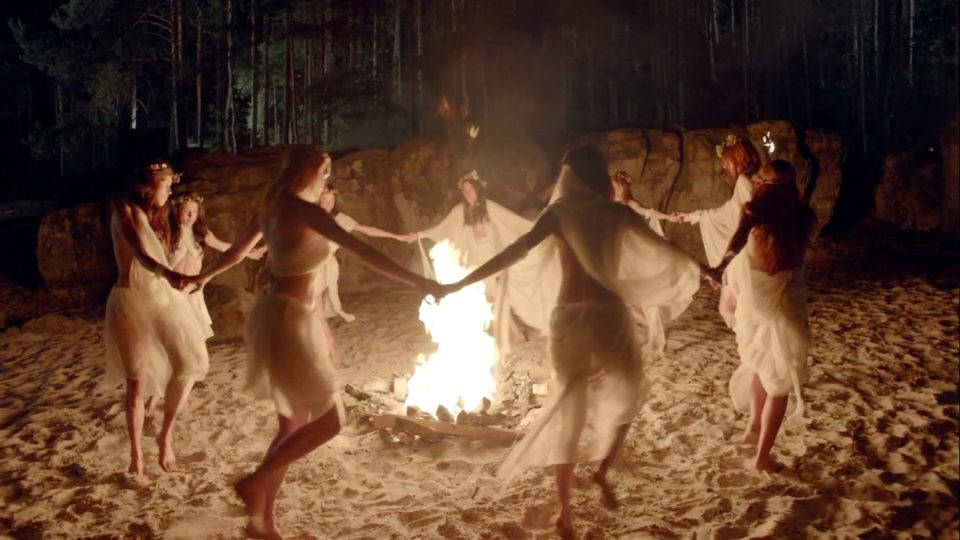
We were up long before the day-o To welcome in the summer, to welcome in the May-o For sumer is icumen in, and winter’s gone away-o! May Day has just passed, which many Pagans know as Beltane, the festival of young adulthood, love, and sexuality. Time for rising early to greet the dawn—if you haven’t been up all night—wearing floral wreaths, dancing ribbons about tall phallic Maypoles, sipping May wine … and making out, at least, if not making love. There is, of course, a great deal of variation within any large community, but part of what distinguishes the Pagan community generally from the mainstream culture is that it describes itself as “sex-positive”.…
-
A Subtle Art, the Medium of Which is Emotion
She was lifting the curtain, looking down from the window in her Civil War blouse, jacket and hoop skirt. Outside, a wagon bearing a flag-draped casket was drawn forward by black horses, flanked with erect soldiers. Suddenly, it was 1865. I was 6, and touring the Custis-Lee Mansion at Arlington National Cemetery with my family. And that tiny moment when a costumed docent lifted the curtain on the scene below transported me back in time, began a lifelong fascination with other eras, living history, modes of dress from other times. It was a feeling, a particular and very specific emotional sense, and I was riveted by that: that in a moment, my sense of where (and when)…
-
“But I’m Lonely!” Finding Fellow Atheopagans
Atheopaganism is a new religious path. The essay in which I laid out its principles is only five years old, and it has been visible on the web for only a year. This inevitably means that practitioners seeking to find people to circle with are going to be a little challenged. It’s fine to practice as a solitary, but many of us prefer to have a community with which we can share our rituals, our observances, and our exploration of our Atheopagan path. It can be difficult to get started. Here are some suggestions which may help. If you’re already a part of a Pagan community, invite your Pagan friends to…
-
An Atheopagan Life–High Spring and the Renewal of the World
Here at the end of February, it is finally obvious that the Sun is coming back. The sunset has pushed back a full hour, and there is still light in the sky at 6:30. The drought hasn’t left us here in California this year, despite some encouraging storms early on. The mild winter has meant that already daffodils and narcissus bloom, and fruit trees burst into color. Willows budded out along the creeks in January. Such beauty is tainted by what it portends—a planet warming, and fast—but it’s lovely to be able to sit outside again comfortably, to breathe the sexy perfume of the young spring flowers. We have come…
-
Some Great Ideas for High Spring (Ostara)
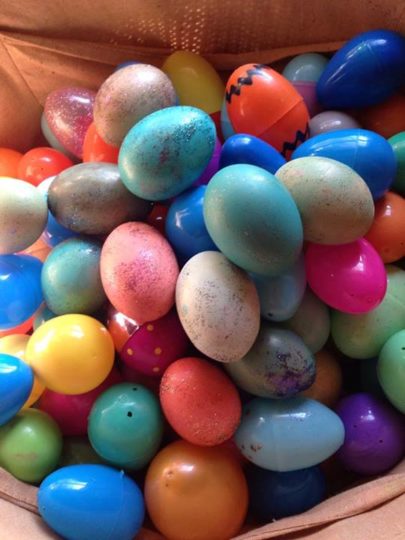
Jon Cleland Host has some wonderful suggestions for High Spring celebrations over at Humanistic Paganism, including instructions for dyeing eggs with natural dyes. Check it out! Photo by Brita Wynn
-
Recipes for Sabbath Feasts
Here is a grab-bag of seasonal deliciousness, as crowdsourced by members of the Atheopagan Facebook group. Enjoy! Yule Mulled Wine—Mark Green 1 (375-ml) bottle of red or tawny port wine 2 (750-ml) bottle red wine, such as Cabernet Sauvignon (cheap! Don’t do this to the good stuff!) 1/2 cup honey 2 cinnamon sticks 2 oranges, zested and juiced 8 whole cloves 6 star anise 4 oranges, peeled, for garnish Combine the red wine (not the port), honey, cinnamon sticks, zest, juice, cloves and star anise in a large saucepan, bring to a boil and simmer over low heat for 10 minutes. Add port wine. Pour into mugs, add an orange peel to each…
-
The Ritual Mask—A Project
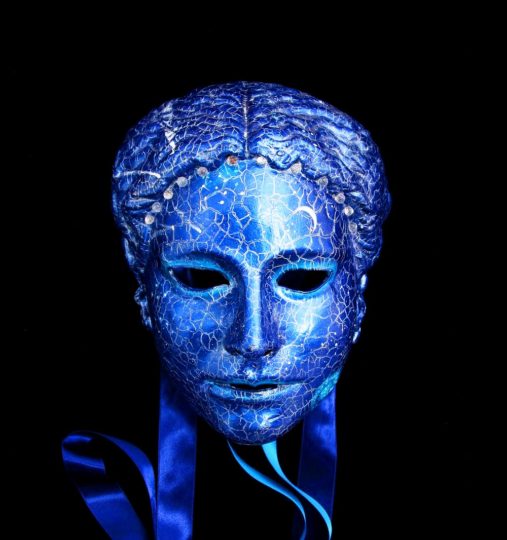
Awhile back, I wrote about the ritual technique of adopting the “mask” of a Quality, attribute, natural phenomenon or even god/dess for purposes of embodying that personality in a ritual. I called the technique the “God mask”. While this technique can be used without an actual physical mask, it’s far more effective using one. And this means that among our ritual tools, it’s a good idea to have one or more masks that we can use in our work. As it happens, I own quite a few masks. I have a small collection of Sub-Saharan African artworks, among them some masks, and I have a few others as well,…
-
Atheopagan Ritual “Witchery”
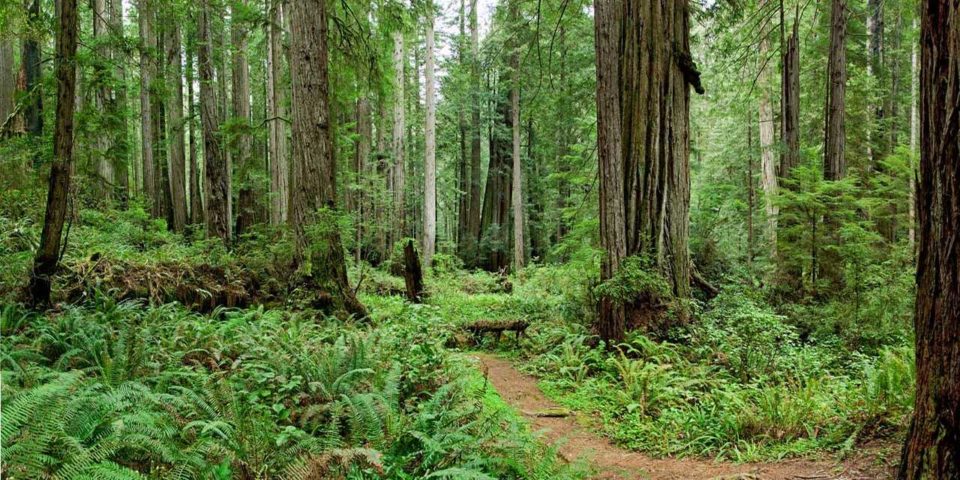
I’ve taken a little latitude with the title of this post. What I want to talk about is ritual behavior the purpose of which is simply to connect with the natural world: rituals that take place in nature and are done to “say hello”, in effect, rather than to achieve some internal transformation, collective shift of consciousness or connection, or celebration of a season’s arrival. Ritual behavior out in the wild using all-natural found materials seems “witchy” to me, so I used the word. I don’t generally think of myself as doing witchy things, so I see what I’m discussing here as somehow categorically different from those rituals which have more specific intentions. If…
-
Priest/esshood, Leadership and Atheopaganism
If you come to Atheopaganism from other Pagan paths, you may have noticed something in my writing, at least: there is no mention of priesthood or priestesshood. That’s not an oversight. Rituals very often have leaders. There is usually one person (sometimes two, but rarely more except with very large groups) who shepherds the flow of the ritual through its phases. This is inevitable and proper: leadership is a real function and all human groups have examples of how it is exercised, even in groups with completely flat power structures. Leading a successful ritual—helping to “move the energy” or facilitate the smooth building of emotion and Presence—is a learned skill, and a powerful…