Practice
-
Ritual Technologies: Scent
As I’ve mentioned before, the most powerfully evocative of the human senses is the sense of smell. The olfactory centers are in the most primitive parts of the brain, and they can summon vivid memories in an instant, simply from a remembered scent. For thousands of years, people have burned incense and aromatic herbs such as sage, yerba santa and sweet grass to alter the mood and atmosphere around them. They have daubed themselves with perfumes and oils, brought bouquets of aromatic flowers into their homes and temples, and scattered flowers over their dead. Indeed, we have evidence of flowers in burials of Neanderthals from 60,000 years ago; whether this was because they…
-
Ritual Technologies: Rhythm
The first musical instrument was almost certainly something resonant being struck: a hollow log, a dried gourd. In fact, percussive rhythm may predate humans as a species: monkeys have been observed beating on hollow logs in a call-and-response with other monkeys. Certainly the noises made while pounding seeds and roots into meal would naturally have become a source of play, even for pre-humans. Despite this near-certainty, we don’t have any fossil evidence of Paleolithic drums. Only flutes, because they were made of bone and could survive. Still, in every culture of the world, we find percussive instruments, and with them, percussive play—often in a context of religious ceremony. Drumming and…
-
Ritual Technologies: Light and Beauty
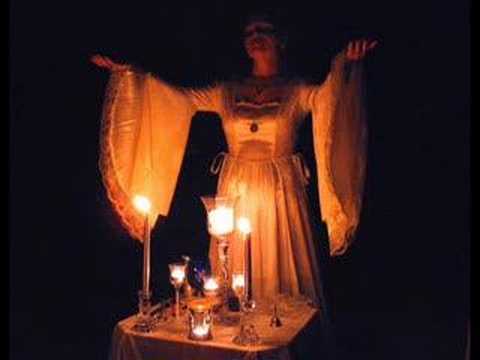
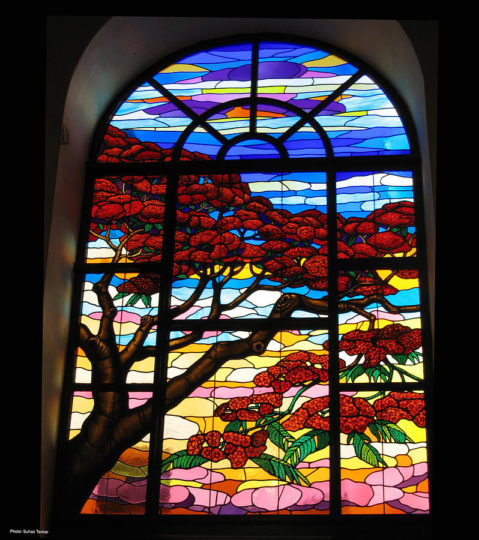
Imagine being in a cathedral. The hush, the dim light from stained glass windows and flickering candles, the faint scent of incense. The faint sound, perhaps, of sacred music through the profound silence. The architecture that sends the eye reaching up, up, to barely discernible vaults. Massive columns, larger-than-life statues of saints. Which, in turns, make the viewer feel small, insignificant by comparison to the soaring magnificence surrounding her. That’s sacred space. The mind cannot help but to downshift into Present, liminal consciousness. Into the Ritual State, which is also known as “trance”. These factors are not accidental. They were learned, over countless years, by those who meant for those who entered…
-
Building Atheopagan Community
As I referenced earlier, Atheopaganism as a named path is new. That means that those of us who are a part of it are rare, and far-flung (the Facebook group has members from across the globe). That said, Atheopaganism has something precious to offer both atheists and Pagans, and those are quite a bit more common. Atheopagan community is therefore likely to be ecumenical community: at first, at least, we will gather with both those who share our worldview and those whose cosmologies differ. Pagans are rare enough in most places; expecting to find a broad community of atheist Pagans may be unrealistic. However, most Pagans are pretty tolerant–they will joyfully be a…
-
Atheopaganism Alone
Recently, I asked the Atheopagan group on Facebook for suggestions of some topics they would like to see addressed here at the Atheopaganism blog. Given that non-theistic Paganism is a minority element of a minority religion, it’s no surprise that several people suggested writing on how to have a solo practice, or how to build an Atheopagan community. First of all, you’re not alone. There are thousands of us who believe as you do. You can connect with them through the Facebook Atheopaganism group, through the Humanistic Paganism website and other spiritual naturalism sites. You’re not alone. It’s true: we’re new as a recognized group, and you may not have others around you who…
-
Ritual Technologies: Sing!
If there is one human sense more than any other that really drills down beneath the thinking mind and evokes feelings, memories, longings, it would be the sense of smell. Olfactory cues go to the most primitive parts of our brains, and are remarkably powerful in snapping us back to powerful feelings and moments long past. Unfortunately, the experience of scent is passive, rather than expressive. While we have receptors for tremendously subtle combinations of chemical cues, we are not able to express ourselves in kind. The second-most powerful sense in terms of emotional impact, however, is sound—particularly, music. Music has the capacity to transport us, to evoke a wide range of…
-
Considering the Moon
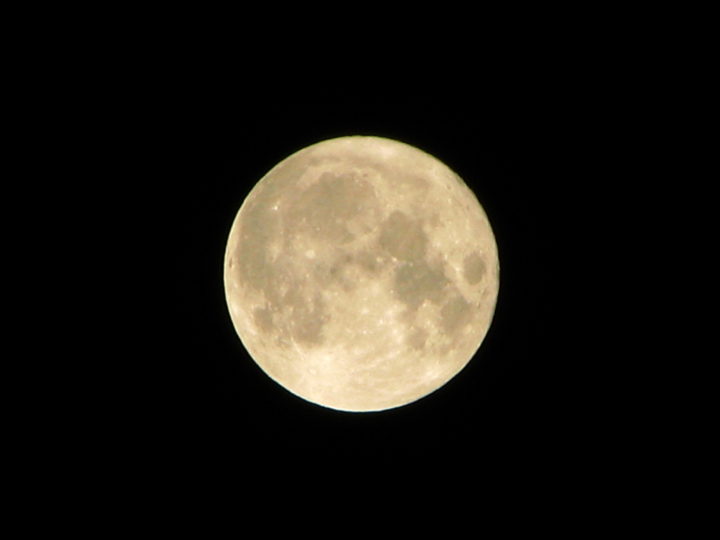
What does the Moon mean to an Atheopagan? Well, to this one, at least, the Moon is the bringer of “magic light”. Low light conditions tend to damp down the activity of the pre-frontal cortex of the brain, enhancing the role of the limbic system in consciousness. In moonlight, we are more likely to feel attentive, emotional and alive in the Present moment rather than trailing off into our thoughts. The same is true of candlelight or firelight–though the flickering of flame is a different quality than the serene calmness of moonlight. There’s a reason why gathering under the full Moon is associated with witches and Pagans. A landscape bathed…
-
Intuitive Understanding and “Divination”
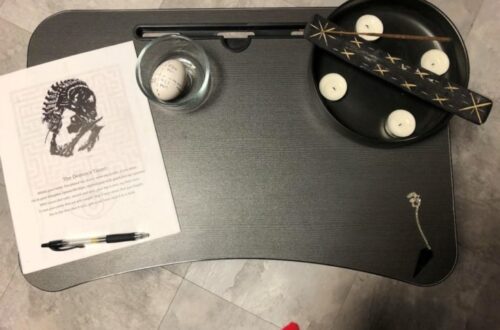
I read Tarot cards. Not as much as I used to, but I still do it. I don’t think of it as “fortune telling”. I think of the Tarot as a magnificently complex set of symbols from which I randomly choose, creating therefrom a narrative which draws up my intuitive understanding of a situation or question and illuminates it in complex, interesting and often surprising ways. In a way, Tarot is like a Rorschach test, only with much richer set of available symbols and a long history of interpretation and lore. Besides, it’s really, really cool. Tarot by candlelight, with a bit of incense? You won’t feel much witchier than…
-
Pleasure as a Sacred Experience
As I practice and have described it, the tenth Principle of Atheopaganism is responsible sensuality: the cultivation of pleasure for its own sake, so long as in doing so we are not harming others or the Earth. It’s May Day weekend, that sexy festival of fertility and passion, so now is a good time to write a bit more about this. I’m somewhat wistful about lost experiences of Pagan joy back in the bad old 80s. Yes, we were clueless and somewhat irresponsible—and some had miserably bad personal boundaries—but there was real freedom and joy in dancing naked about a Maypole, in sharing touch and pleasure with friends and comrades…
You May Also Like

Ancestors: A Conundrum
In the Season of Fire

The Atheopagan Way, and What It Isn’t
-
Shame, Trust, Safety and the Freedom to Make Magic
Shame. It impedes so much. It’s easy to succumb to the impulse to think that it’s something to be overcome, and that’s the end of it. Freedom, eh? And yet… Someone completely without shame is a sociopath. Shame is a guide. It can help us to understand how best to fit to the fractal puzzle which is human relations. And once having learned its lessons, it’s time to let it go. But we don’t. Unfortunately, we tend to seize it too closely, to internalize its voices, to make into Big Truth About Me what should really only be a gentle nudge, a wise voice about how to be a Better Me.…