-
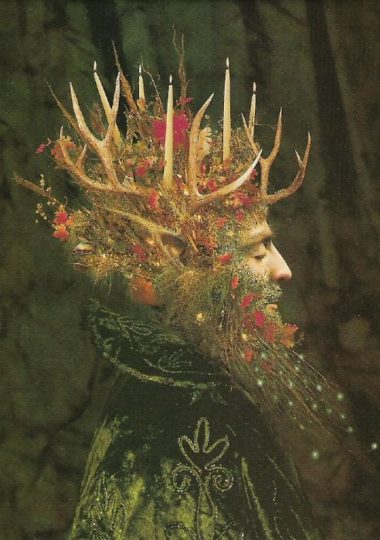
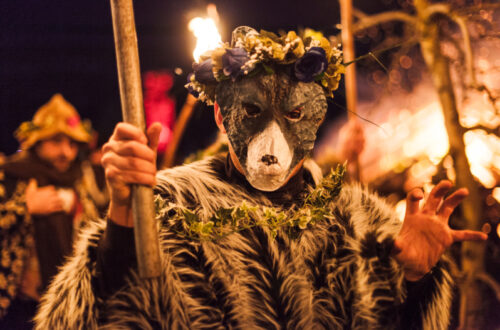
The God Mask – A Ritual Technique
We had a great conversation at our online video chat in the Facebook Atheopagan group today. Topics ranged, but one that stuck out for me was Glen Gordon’s discussion of his work to create a new lexicon for Pagan and ritual phenomena he feels aren’t well defined by existing words in English. As I’ve said elsewhere, although an atheist I spent many years circling in ritual with various elements of the Pagan community here in Northern California, viewing the invocation of gods and the conducting of “magic” as metaphorical, psychological processes to influence the minds of participants rather than as literal communications and physically effective influencers of events. Having now…
-
The Atheopagan Principles Explored: Principle 4—Humility
This is the fourth installment of a 13-part series exploring the Atheopagan Principles, as described in my essay “How I Became an Atheopagan”. To read the whole series, click the tag “Atheopagan Principles” in the tag cloud at right. Principle 4 of Atheopaganism is, I am humble. Humility is a problematic concept in the West, where self-esteem is often conflated with egotism. Being aware of one’s positive qualities and abilities is every bit as important as being aware of one’s failings and frailties. The Atheopagan Fourth Principle does not mean that we should all be excessively critical of ourselves or refuse all recognition for our accomplishments and qualities. Be proud of who…
-
The Atheopagan Principles Explored: Principle 3—Gratitude
This is the third installment of a 13-part series exploring the Atheopagan Principles, as described in my essay “How I Became an Atheopagan”. To read the whole series, click the tag “Atheopagan Principles” in the tag cloud at right. Principle 3 of Atheopaganism is, I am grateful. But constraints of language make even this seemingly simple concept obscure and confusing. Grateful for what? When? All the time? How is that possible? This is because “grateful” is an adjective, and as such appears to describe a quality to characterize a person: Bob is red-haired, blue-eyed, right-handed, and grateful. Right? The way the English language addresses gratitude implies that it is something you either are…
-
The Atheopagan Principles Explored: Principle 2—Honoring the Earth
This is the second installment of what will be a 13-part exploration of the Atheopagan Principles. The derivation and listing of the Principles is found in Part II of my essay “How I Became an Atheopagan”, which you can read here. To read the whole series, click on the “Atheopagan Principles” tag in the tag cloud on the right. The second Atheopagan Principle is to honor the Earth. It is the Pagan part of Atheopaganism. There are plenty of reasons to do so. Planet Earth engendered humanity as a part of its biosphere, and sustains us with the food we eat, the water we drink, and the air we breathe. It inspires us…
-
The Atheopagan Principles Explored: Principle 1–Critical Thinking
The 13 Atheopagan Principles are my take on a code of ethics for atheist Pagans: guidelines for living and touchstone values rooted in the Four Sacred Things of Love, Life, Truth and Beauty. Their derivation is enumerated in Part II of my essay “How I Became an Atheopagan”, which you can read by clicking here. I thought I’d take a turn through these principles and elaborate on them in a series of short pieces, so let’s start with the first: I understand that the metaphorical is not the literal. The core of this principle is skepticism and critical thinking: to use reason and the scientific method to determine what is most likely to be true, rather…
-
WE EXIST.
Recently, I’ve participated in online discussions both on Facebook and over on John Halstead’s blog on Patheos, “The Allergic Pagan”, relating to a rant by Rev. Cathryn Platine of the Maetreum of Cybele, the background on which can be found here (including the comment thread Platine deleted, apparently finding it too threatening). The upshot of Rev. Platine’s quite abrasive screed is that people with a naturalistic view of the world can’t be Pagans: in fact, that without “polytheistic devotionals”, no one can be. She suggests we all toddle off and become Unitarians. I have news for Rev. Platine: we exist. I exist. And among our number happen to be some rather well-known Pagan…
-
The Time of Hunkering Down
In the Northern Hemisphere, January is often cited as the most challenging month of the year. Gone are the festivities of December; now it’s just cold, dark winter, with the sole charge of the month seeming to be to get through it. It’s easy to find January a bit demoralizing. I find quite a bit of social letdown in January after all December’s fun. People are tired of parties and rich food and drinking and presents, and go back to their work and their regular lives with a kind of grim determination, buoyed by the holidays but also feeling them recede rapidly in the face of hostile weather, short days…
-
When Is a Religion For?
Recently, I attended the Bay Area Solstice, a ritual celebration of the winter solstice which springs from the rational/skeptic community. Raymond Arnold, who first organized such a solstice event in New York, from which they have spread, has crafted a passage through time in which the darkness is contemplated, the human story is framed as an emergence from darkness into light, and the future is viewed as potentially one of health, optimism and exploration. I enjoyed it a great deal. There are many ways for me to think about my experience at the Bay Area Solstice, and I’ve been having discussions by email with Raymond and others about its structure, underlying…
-
MULLED WINE–a Poem for the Yule Season
It begins where the smoke hits your eyes: smouldering peat, Mutton stew on a broad iron hook, Deep snow. How can it ever have been summer? Apples wrinkling and mice in the barley— With so much to fear, thank the gods for company! We’ll tell our tales, remember how we passed the cold Last year, and the one before. And those who couldn’t. The grape leans across The seasons, clasps the hand of summer’s Dried rind, dreaming the new fruit, Calling the sun back, World without end amen. —Mark Green
-
An Atheopagan Life: Observances for November and December
Originally published at Humanistic Paganism. November and December certainly don’t lack for observances and holiday celebrations. In the temperate zone of the planet, pretty much every culture has had some way of celebrating the winter solstice, and the accumulation of many of those traditions lives with us today in the form of Christmas, Chanukah, the Pagan Yule, newer traditions such as Kwanzaa and even Festivus. For Atheopagans, navigating this season in a manner free of theistic and supernatural overtones can be a bit of a challenge. We’re besieged with well-intentioned messages from relatives and friends rooted in their credulous religious beliefs. Exasperating as it can sometimes be, the main thing is…