-
Facing Forward: Atheopaganism and Cultural Appropriation
Cultural appropriation is a concern of people who are (or have historically been) oppressed. It is the use of symbols, religious rites and/or cultural practices by members of the oppressing culture for their own gain or entertainment, without permission, invitation, or inclusion of those of the culture whose symbols or practices are being used. This is a hot topic right now, and one of particular concern to Pagans who draw on different cultures for their symbologies and rituals. We’ve discussed the subject a lot on the Atheopaganism Facebook group, and I thought I’d write about it here so there was a more permanent capture of thinking about cultural appropriation as it…
-
Substance Use, Background Noise, and Reenchanting the World
I’m drinking a beer as I write this. That’s not a big deal. I’m not drunk and I don’t intend to have another. But I’m sitting at my local with a laptop, and I’m surrounded by a typical Friday afternoon crowd, which will swell considerably after 5:00. People in my society drink. They drink alcohol, and they drink tremendous volumes of coffee. And quite a large number of them regularly smoke pot, too. I’m still getting used to the fact that it’s legal in California now, but I encounter the smell of burning weed so frequently that I don’t even register it any longer. And though the numbers are dropping,…
-
REGISTRATION IS OPEN! Moon Meet 2018—A Gathering of Atheopagans and Friends
The second annual Moon Meet is a congregation of Atheopagans, non-theist Pagans and others interested in our paths, held from Friday, August 24 through Sunday, August 26, on private land on a redwood-covered mountain near Healdsburg, in the beautiful wine country of Sonoma County, California. Registration is now open! Click here to register! Moon Meet—named because we will hold it during the weekend of the full moon—is a group camping gathering; a few indoor sleeping locations are available by prior arrangement for those disabled or coming from distance and unable to bring their gear along. We will share meals and workshops, hold a community discussion about how our Atheopagan community is developing and…
-
Toward Atheopagan Mysteries
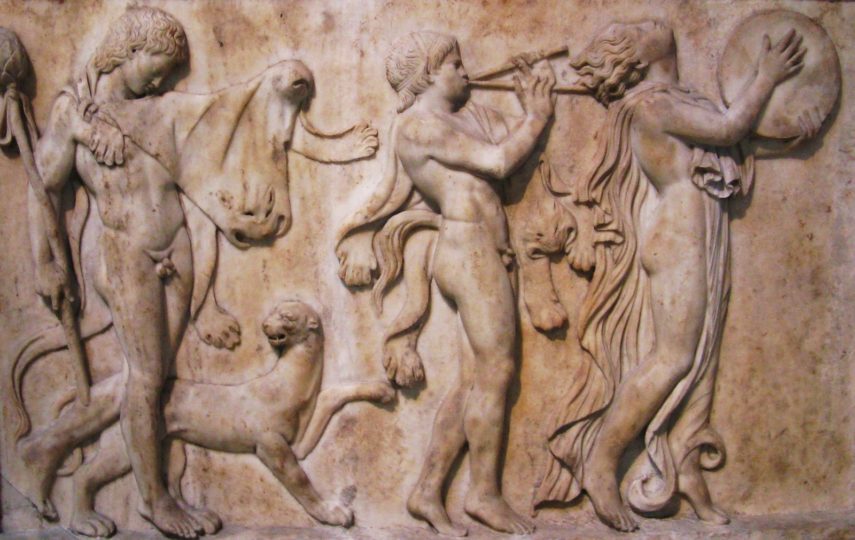
Sacred Mysteries were initiatory rituals or ritual cycles in the ancient world which revealed secret wisdom to participants. Some examples include the Eleusinian Mysteries of ancient Greece and the Mysteries of Dionysos in Rome, and the initiatory mystery religion of Mithraism, also from the Roman period. These rituals and ritual cycles were characterized by solemn oaths of silence, so many of the secrets revealed in them are now lost, or can only be pieced together through comments made by initiates who later converted to Christianity and rejected their prior pagan experiences. Modern Pagan practitioners have resurrected some of these Mystery initiation traditions by creating new rituals that draw on the symbology and what is known…
-
SAVE THE DATE and CALL FOR WORKSHOP PROPOSALS: MOON MEET 2018!
SAVE THE DATE! The second annual Moon Meet is a congregation of Atheopagans, non-theist Pagans and others interested in our paths, held from Friday, August 24 through Sunday, August 26, on private land on a redwood-covered mountain near Healdsburg, in the beautiful wine country of Sonoma County, California. Moon Meet—named because we will hold it during the weekend of the full moon—is a group camping gathering; a few indoor sleeping locations will be available for those disabled or coming from distance and unable to bring their gear along. We will share meals and workshops, hold a community discussion about how our Atheopagan community is developing and how best to move…
-
Atheism, Paganism, and Agreeing to Disagree
I’ve been thinking lately about the crossroads where Atheopaganism lives: straddling lines between atheism, Paganism, and activism. In the atheistic world, skepticism is a given. There, when you propose something—a policy, a factual claim, a strategic approach to problem solving—it is assumed that you will have both material evidence and cogent argumentation to back your position. Others are welcomed to interrogate, prod at, and refute the position as best they are able. This is a process by which we can arrive at a position which is more likely to be correct than if we did not so critique the initial proposition. The process is central to the operation of science…
-
Talking with Atheists Who Dismiss Your Atheopagan Practice
Existing in both the atheist world and in the Pagan, Atheopagans have the unique “good fortune” of fielding criticism from extreme elements of both. I’ve written before about Pagan fundamentalists who dismiss our religion as “not real Paganism. ” Today, we take a look at the atheist community’s counterpart: the so-called “anti-theists”. A vocal subset of atheists, the anti-theists start with the position that there are no literal gods. So far, so good. But… From there, many of them overreach, arguing not only that theism is destructive and irrational, but that all religion and spirituality are fraudulent, pointless and harmful behaviors that humanity would be better off without. Anti-theists can…
-
Sigils: Barcodes for your Brain
In Atheopaganism, we understand ritual “magic” as the manipulation of consciousness according to desired outcomes: as “programming the mind”. It’s not supernatural, and it doesn’t affect things at a distance, but it does have a powerful ability to change our selves: to increase our courage, our focus, our attention to things we find important. Over the centuries, many cultures have used drawn symbols to communicate magical meaning. Examples ranging from Roman curse scrolls incised on lead sheets to European ceremonial magic in Enochian script to Vodoun vé-vés have signified the invocation of results, magical beings or deities. This is an old practice, and one Atheopagans can use as well. A…
-
The Miracle of Dirt
Of all the many factors on planet Earth that enable us to live and thrive, there are two which border, in my opinion, on the miraculous*: the conversion of sunlight into sugar through photosynthesis, and the mysterious alchemy of microbes and nutrients and water that makes dirt into the life-giver to us all. Yet we take dirt for granted—even denigrate it. It’s “dirty”, after all. We walk on dirt; we scrape it off our shoes and sweep it from our houses and porches. It’s gray, or brown, or yellow, or red, but generally not the popping, pleasing colors we are hard-wired to find breathtaking, like sunsets or flowers or bodies…
-
Beyond Faith. Beyond Fundamentalism.
Let’s start by acknowledging that the definitions are fuzzy. There is no universally agreed-to definition of what a “religion” even is. “Spirituality” is just as indeterminate. So all we can do is look at religions of the world and try to identify the elements that compose them. When I do that, I conclude that a religion, functionally, comes in three pieces: a cosmology, which is a description of the nature of the Universe which is subscribed to by adherents of the religion; a set of values which define what is Sacred, what is important, and how we should live; and a set of practices such as rites, holidays, traditions and…