Ritual
-
Journeying in the Inner Landscape
Here at Atheopaganism, we have discussed ritual skills quite a bit. Developing the skill sets that help people to attain the Ritual State (or “trance”) is key to our ability to be effective ritualists who can transform consciousness in empowering ways. Click here to see previous posts tagged as “Ritual Technologies and Core Skills”. Thus far, these posts have been about using skills and technologies to induce the Ritual State. But today we turn to another question: what to do once you get there? Trance is powerful, and can be experienced simply as a glowing, liminal state within which to conduct ceremonial activities or contemplation…or it can be the context…
-
On the Other Hand…(A Love Letter)
So, I’ve been a little hard on the Pagan community lately. I’ve decried abuses and hierarchies, lack of political engagement, and the leftovers of the sexual culture of the 1960s that still thrive in many corners of it. Those things are true, in my opinion, and I stand by them. So why, one might ask, do I continue to be a part of a community of people who I find so problematic? Well, let me tell you: because it’s wonderful. In all my experience, no cohort of people has ever been so smart, interesting, creative, unique and, by and large, genuinely good-hearted. Weird, yes—but isn’t that just a synonym for creative? Despite blind…
-
The Cauldron of Hope: A New Year’s Eve Ritual
If you are gathered with friends or family for New Year’s Eve, here is a light ritual you can do that isn’t interruptive of festivities but can add some meaningful heft to the launch of the new calendar year. Place a dollar coin, for luck and prosperity, into the bottom of an iron cauldron or Dutch oven. Pour in 2″ of fresh water (rainwater if you have it). Add a handful of kosher salt or sea salt, for strength and patience, and stir until as much salt as possible has dissolved into the water. Each guest is invited to drip a small libation in the cauldron from whatever they are drinking,…
-
The Yule Log—A Winter Solstice Ritual
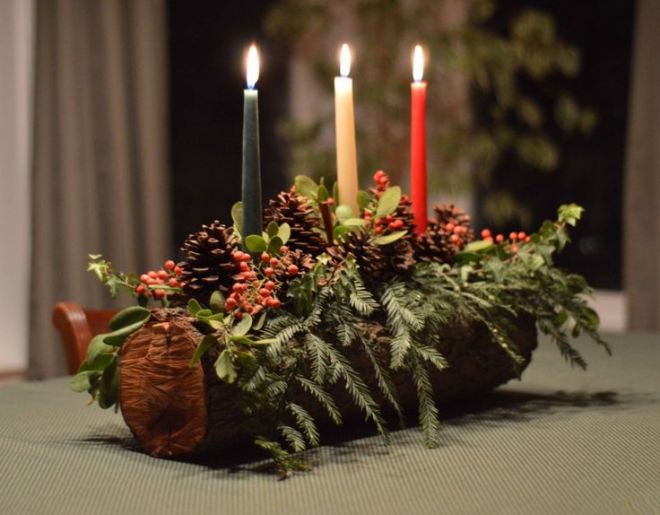
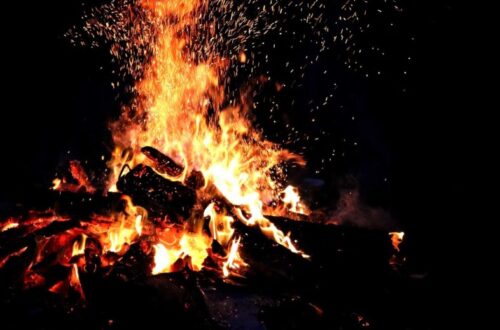
This year, the longest night of the year—Winter Solstice, or Yule—takes place on Thursday, December 21st. On the night of the Winter Solstice, an old tradition that we have adapted for Atheopagan purposes is the burning of the Yule log. Yule marks the moment in the year when the sun’s steady decline, with days growing shorter and shorter, comes to a halt, and the days begin to become longer again. The day the sun begins to return is celebrated by cultures throughout the world and going back far into prehistory; indeed, such archaeological marvels as the Newgrange passage burial in Ireland were constructed precisely so that they aligned with the sunrise…
-
Giving Voice: Public Speaking as a Core Ritual Skill
Speaking before an audience is terrifying for many people. In fact, surveys indicate that many fear public speaking more than death itself. However, for ritualists, speaking confidently before a group of listeners is a core skill that enables clear communication, evocation of emotion, and establishment of leadership credibility which provokes a sense of safety and confidence in the ritual proceedings on the part of participants. As a ritual leader—and remember, in Atheopaganism there is no priesthood, anyone can be a ritual leader—your spoken voice is perhaps your most powerful tool for moving participants into ritual space and common purpose. As a participant, it is sure to be called upon at…
-
What Makes a Ritual “Successful”?
John Halstead over at Humanistic Paganism has published a rather sharply-worded piece about “10 Signs You’re Half-Assing Your Ritual”. It’s well worth a read, and in general, he’s right: there is a lot of ho-hum ritual out there and many, if not most of us can do a better job of preparing and enacting our rites. But I think there is something missing in John’s piece, and that is this: a discussion of what we mean by a “successful” ritual. This is often a moving target. When you talk to someone who has come out of a successful ritual, more often than not what they will talk about is not…
-
A Dawn Prayer
Whose warm love flows across the land each day Stirring Life, the world’s magic, arms yearning up, Turning each green leaf to follow. Whose generous balm Upon the skin is love’s touch, ahhhhhh heated fingers soothing, Whose roar boils water from ocean to sky Drawing sweet from salt, becoming rain, snow, river, lake; Whose fervid beat upon us is deadly, and yet Contemplating cold stars how we miss it, the Golden One, quotidian center Of our days, steady companion, sower of treasures great and small: Light-bringer, Life-quickener, dazzling, unbearably bright, Hail, oh hail the magnificent Sun!
-
May Morning
With love for all of you, on this the eve of May Day… May Morning Fresh as the day the world was made, This morning: dew-spattered through feather fans Of foxtail and wild rye. Mars is low on the horizon, for once. Still As a caught breath, the day, hushed, Holds for a slow-golding time, the rose hints Of bold and bright to come, of music Yet to be made, dances old as the village, new as tomorrow’s milk. How can it be, four billion, five hundred million years, the old and battered Earth, Veteran of ice and fire, meteor, petroleum, stupidity, avarice, ignorance How can it be, this innocence:…
-
Ritual Technologies: Movement
Since probably before humans were even human, there has been music. Rhythm, at least. And where there is rhythm, there is dance. There are preserved footprints in painted caves in France that indicate young boys dancing 20-30,000 years ago. Some ritual dances are still performed today after untold continuous centuries. Ritual isn’t just something that happens in our heads. When effective, it is an immersive experience, involving our entire beings. We are not, after all, just brains carried by flesh robots…our nervous systems extend throughout our bodies and participate heavily in our brain states. Effective rituals involve some kind of engagement of the body: singing, for example, or clapping, dancing, walking, or other movement…
-
Ritual Technologies: Scent
As I’ve mentioned before, the most powerfully evocative of the human senses is the sense of smell. The olfactory centers are in the most primitive parts of the brain, and they can summon vivid memories in an instant, simply from a remembered scent. For thousands of years, people have burned incense and aromatic herbs such as sage, yerba santa and sweet grass to alter the mood and atmosphere around them. They have daubed themselves with perfumes and oils, brought bouquets of aromatic flowers into their homes and temples, and scattered flowers over their dead. Indeed, we have evidence of flowers in burials of Neanderthals from 60,000 years ago; whether this was because they…